Patrick Sullivan
Cybersecurity
Cyberattack Response for Small Businesses: Why Your First Call Matters Most
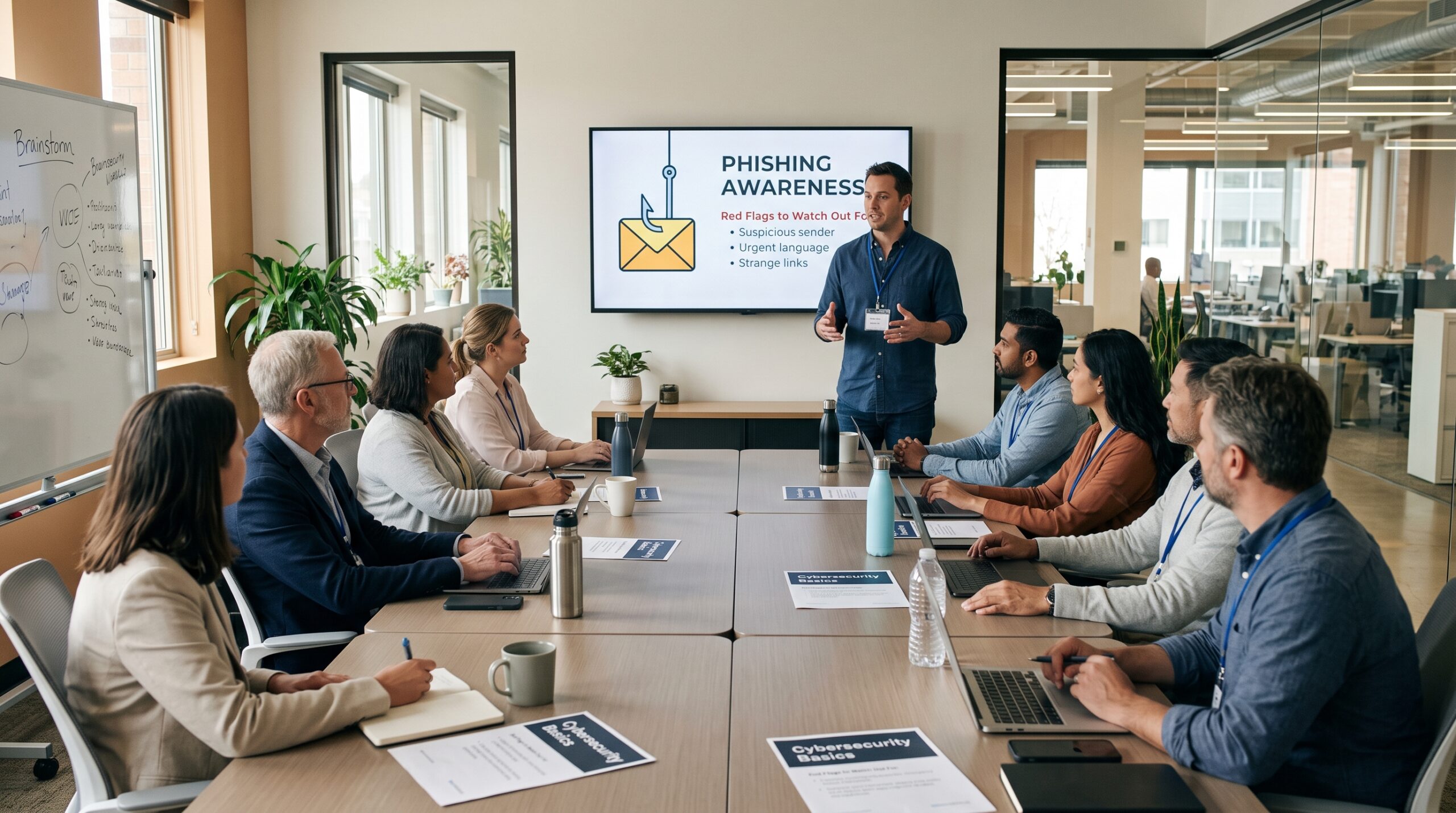
The most important step in a cyberattack response for small businesses is also the simplest: avoid making changes to affected systems and call your IT or cybersecurity partner right away. What happens in the first few hours largely decides how long recovery takes and how much the incident costs.
Rebecca Lamanna, our Business Development Manager, made this point in Clutch’s October 2026 article, “Cyberattacks Are Common. Here’s How Small Businesses Recover”. This post builds on her advice: what a partner handles in those first hours, and how to choose one you can rely on.
What a true Partner Handles in the First Hours
When a business has the right partner in place, leadership does not need to know how to investigate or contain an attack. The only job is to get in touch with your Managed IT Partner. From there, an experienced team takes over four tasks:
- Scope: confirming which systems, accounts and data were affected.
- Containment: stopping the attack from spreading to other devices or users.
- Communication: helping leadership decide what to tell staff, clients, insurers and, when required, regulators.
- Recovery: restoring systems and data safely, investigating the origin of the attack and closing the gap that let the attacker in.
“Don’t panic, and don’t start randomly making changes to affected systems. The first step is to engage your IT team or cybersecurity provider immediately.” Rebecca Lamanna, Business Development Manager, Parachute |
Well-meant fixes, such as wiping a laptop or resetting a server, can destroy the evidence needed to understand what happened. That is why the most valuable part of any response plan is knowing who to call before anything goes wrong.
Why the First Hours Matter More in 2026?
Attacks are moving faster, and the cost of a slow response keeps rising. According to IBM’s 2026 Cost of a Data Breach Report, the average breach in the United States now costs $11.5 million. Globally, breaches that took more than 200 days to identify and contain cost $5.65 million on average, compared with $4.32 million for those resolved sooner.
The 2026 Verizon Data Breach Investigations Report found ransomware in 48% of breaches and a human element in 62%. AI is also making phishing messages more convincing, as we explained in Cybersecurity Awareness Month 2026: Why This October Is Different.
For businesses in Los Angeles, Orange County and San Diego, the stakes include more than downtime. California law requires businesses to notify affected residents when their unencrypted personal information is, or is reasonably believed to have been, acquired by an unauthorized person, and insurers and larger clients increasingly ask to see a response plan before they renew a policy or sign a contract.
Cyberattack Response can Become a Business Problem
Your team shouldn’t have to improvise
In many growing companies, IT grew up around a few capable people. When an attack lands, the response often falls to someone who has never handled one. Good intentions can still lead to lost evidence, longer downtime and higher recovery costs.
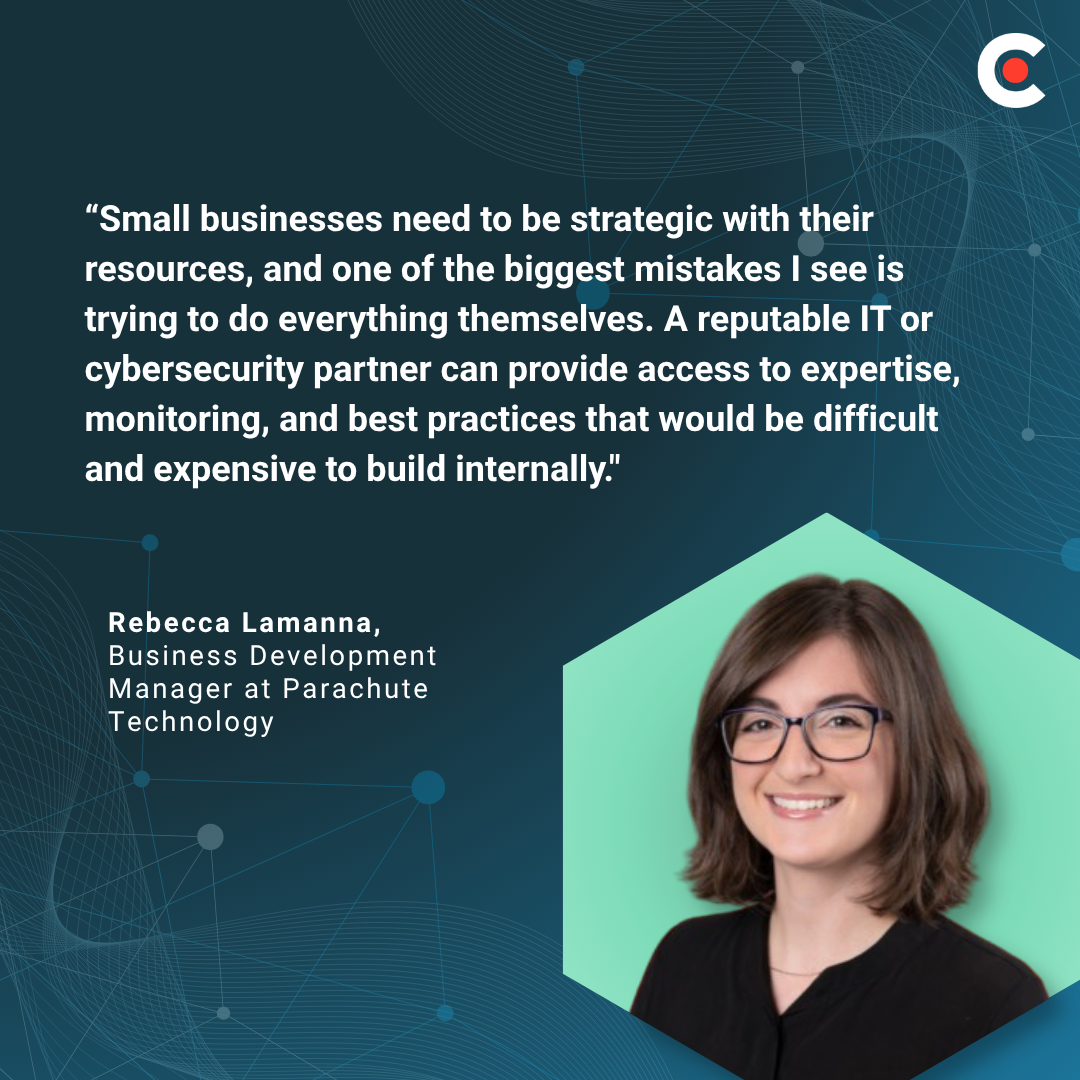
“Small businesses need to be strategic with their resources, and one of the biggest mistakes I see is trying to do everything themselves.” Rebecca Lamanna, Business Development Manager, Parachute |
An experienced IT partner brings a team that has handled incidents before, a clear plan and the authority to act, so your staff can keep running the business.
Besides that, after an incident, insurers, auditors and clients want to know which protections were in place and what happened next. Reconstructing that from memory is difficult and rarely convincing. Documented security practices, continuous monitoring and independently audited controls, such as SOC 2, Type 2, give you a clear record to share.
Security Tools Do Not Add Up to a Strategy
Many small businesses buy security tools one at a time, each to solve a single problem. Without people to manage them, those tools can leave gaps that look covered on paper and add cost as the business grows.
“Security maturity is built intentionally over time, not by accumulating tools to check a box.” Rebecca Lamanna, Business Development Manager, Parachute |

How to Choose a Partner You Can Call in the First Hour
Small businesses do not need an in-house 24/7 security team to respond well to an attack. They need a partner who works as an extension of their team, already knows their systems and is ready to act. These steps help you find one.
1. Ask Who Is Watching Your Systems at Night and on Weekends
Attacks rarely wait for business hours. Look for a provider with a 24/7 security operations center staffed by people, not just automated alerts that land in an inbox until Monday.
2. Ask What Happens in the First Hour of an Incident
A good partner can explain, in plain language, who answers your call, how quickly they respond and what they do first. If the answer is vague, the response will be too.
3. Ask for Proof of Independently Audited Security
A SOC 2, Type 2 report shows that an independent auditor has tested a provider’s security controls over time. It is one of the clearest ways to confirm that a partner protects its own systems as carefully as it will protect yours.
4. Look for a Dedicated Team That Already Knows Your Business
During an incident, there is no time to explain your network from scratch. A dedicated team that manages your systems day to day can act immediately because it already knows how everything connects.
5. Check What Similar Businesses Say
Reviews and client stories show how a provider behaves when something goes wrong. Look for comments about responsiveness, clear communication and staff who feel like part of the team.
6. Make Sure Someone Can Be On Site When It Matters
Most issues are handled remotely, but some incidents need hands-on equipment. For businesses in Los Angeles, Orange County and San Diego, a partner with local offices can be on site quickly when it counts.
“A reputable IT or cybersecurity partner can provide access to expertise, monitoring, and best practices that would be difficult and expensive to build internally.” Rebecca Lamanna, Business Development Manager, Parachute |
Handling a Cyberattack Alone vs. With a Managed Security Partner
| On your own | With a managed security partner | |
|---|---|---|
| Detecting an attack | Often noticed after the damage is done | Monitored 24/7 by a security operations center |
| The first hour | Whoever is available tries to fix it | An experienced team follows a structured plan |
| Your team’s time | Pulled away from their jobs, often for days | Focused on running the business |
| Recovery | Backups untested until they are needed | Backups managed and tested for you |
| Proving you were prepared | Pieced together after the fact | Documented practices and audited controls |
Why Growing Businesses Trust Parachute
Parachute is a Managed IT Services provider with offices in Los Angeles, Irvine and San Diego, along with San Francisco, San Jose, San Ramon and Sacramento. Our security operations center, managed detection and response, and backup and disaster recovery are part of our managed IT security services, so client partners have one team to call when something goes wrong.
- SOC 2, Type 2 certified, which places Parachute among the top 5% of MSPs worldwide.
- Clutch Global Award winner since 2023, including Cloud Security, Managed SIEM Services and Breach & Incident Response in Summer 2026.
- Cloudtango MSP Select every year since 2022.
- Rated Excellent on Google, with more than 500 reviews.
Frequently Asked Questions
What should a small business do right after a cyberattack?
Stay calm, avoid making changes to affected systems, and contact your IT team or cybersecurity provider immediately. Well-meant actions such as wiping devices or restarting servers can make the situation worse and complicate the investigation.
Why should a small business work with a cybersecurity partner instead of handling it alone?
Effective cybersecurity requires expertise, 24/7 monitoring and consistent execution that are difficult and expensive to build in-house. A managed IT partner provides a trained team, continuous monitoring and a structured response plan.
How do I choose a cybersecurity partner for incident response?
Look for a provider with a 24/7 security operations center staffed by people, a clear plan for the first hour of an incident, an independently audited SOC 2, Type 2 report, a dedicated team that knows your systems, strong reviews from similar businesses and local staff who can be on site when needed.
How does Parachute help with cyberattack response?
Parachute provides 24/7 monitoring and incident response through its security operations center, along with SIEM, managed detection and response, and backup and disaster recovery as part of its Managed IT Services. Parachute is SOC 2, Type 2 certified and has offices across Northern and Southern California.
Schedule a call with someone who’s actually helpful, and we’ll show you how we would take cyberattack response off your plate: parachute.cloud/free-consultation